
Namkaran · Barsa
Naming ceremony
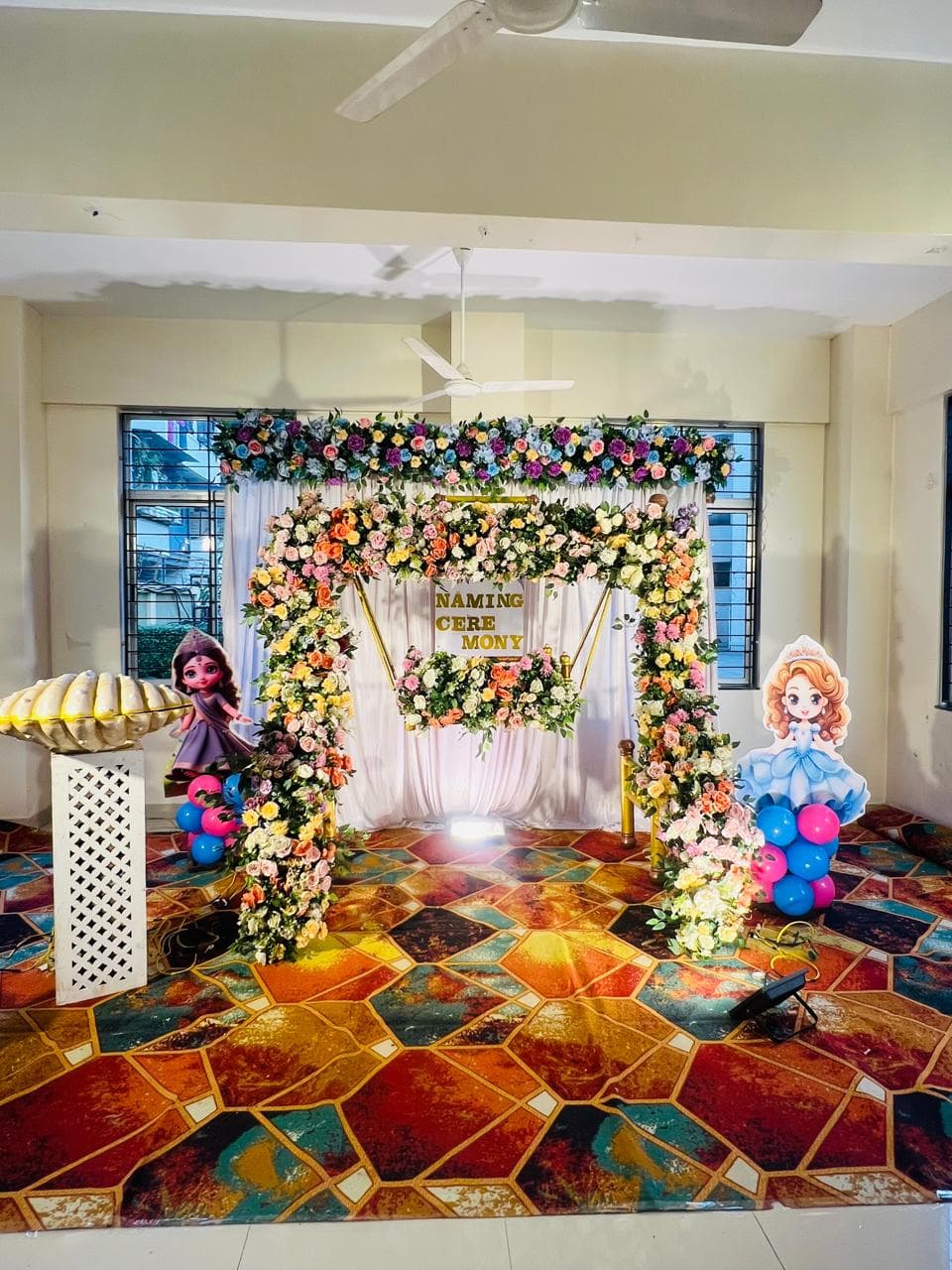
A namkaran is intimate and exact. We set the cradle, the ritual corner, the seating for elders, and a meal that respects the family’s custom — Maharashtrian, North Indian, or South Indian.
Naming ceremonies in Nanded City are often at home: a palna in the hall, a ritual corner the priest can reach without crossing the cake, seating that puts grandparents first. Barsa and namkaran ask for quiet precision more than a stage.
South Indian families on this road ask for jasmine, silk, and a satvik meal. Maharashtrian houses ask for a custom the elders already know. We do not overwrite the ritual with a theme. The floral and the cradle sit around it.
If the guest list needs a clubhouse or a Sinhgad Road hall, we keep the same layout logic — ritual first, meal second, photographs where the light actually is. WhatsApp the date and the custom. We reply in Marathi, Hindi, or English.
Typical gathering: 40–150 guests. Final scale follows your home, society lawn, or Sinhgad Road hall — also spelled Sinhagad Road.
Areas we hold this: Nanded City · Sinhgad Road.
Themes that sit under this day: Maharashtrian · South Indian.
Related celebrations: Housewarming · Thread ceremony.
Ask plainly
Questions we hear
- Do you hold namkaran at home in Nanded City?
- Yes. Many naming ceremonies we hold are in Nanded City homes or society halls. We set the cradle, the ritual corner, and elder seating before we talk about décor themes.
- Can the meal follow Maharashtrian, North Indian, or South Indian custom?
- Yes. Satvik and family menus are part of the plan. Tell us the custom on the first WhatsApp — the house works all three on this road.
- Is a naming ceremony only for small gatherings?
- Typical namkaran gatherings are 40–150. When the list is larger we use a society lawn or a Sinhgad Road hall and keep the ritual map the same.