
Munj · Upanayana
Thread ceremony
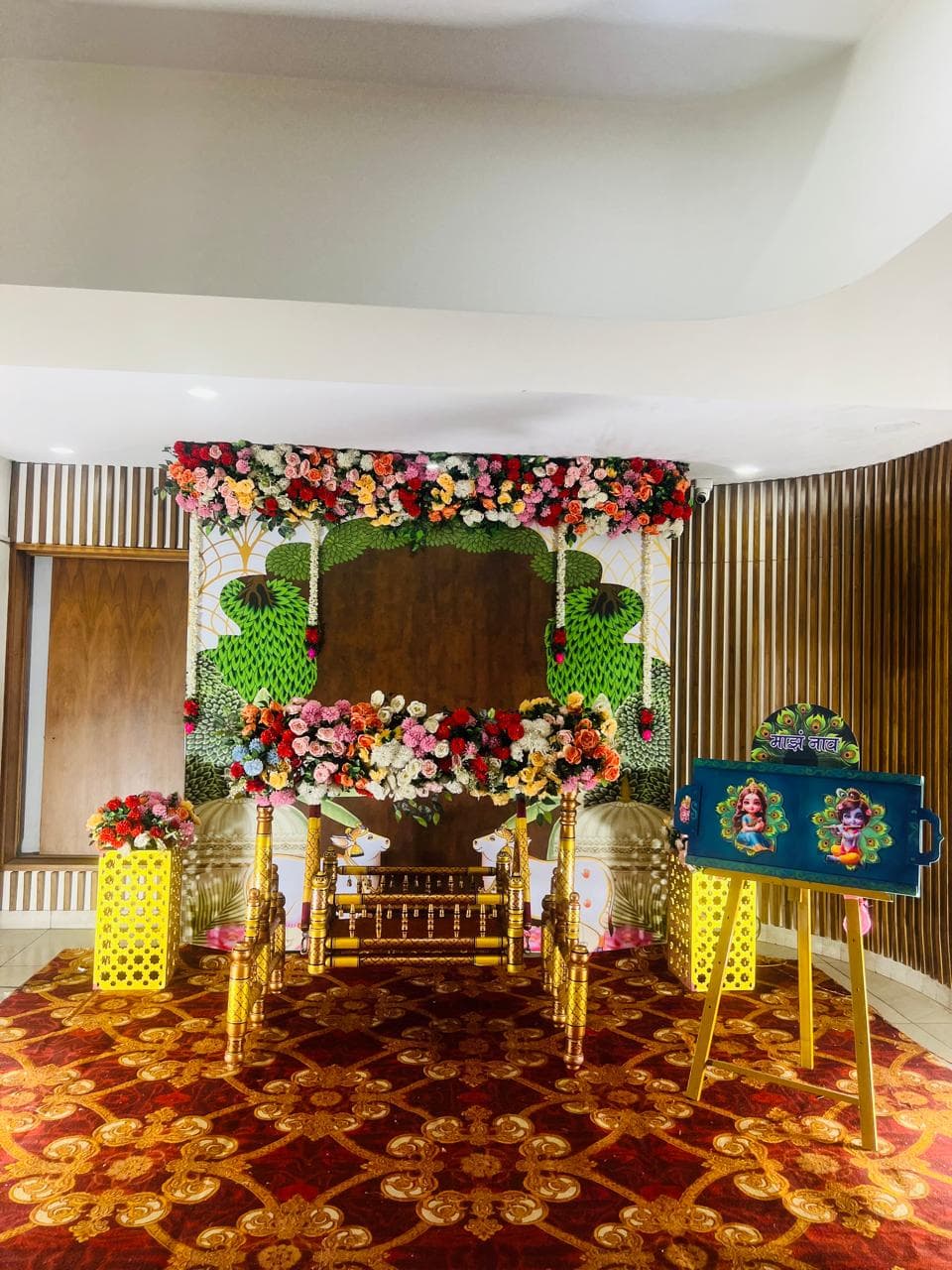
Munj asks for precision: mandap, fire, seating for priests and grandparents, and a meal that holds a long morning.
Munj in the Nanded City township usually sits on a society lawn: a mandap, fire the priest can hold, chairs for grandparents, and a morning that does not rush the boy. We ask the society’s curfew and power point before we promise a dhol.
When the list needs a larger floor, the same ritual map moves to a Sinhgad Road banquet. The wedding-week crew is not borrowed for this day. Thread ceremony has its own team — mandap, meal, invites, and elder seating as one file.
Maharashtrian munj and South Indian upanayana ask for different objects and a different pace. We do not dress a temple cliché over the priest’s work. WhatsApp the date and the custom. We reply in Marathi, Hindi, or English.
Typical gathering: 80–200 guests. Final scale follows your home, society lawn, or Sinhgad Road hall — also spelled Sinhagad Road.
Areas we hold this: Nanded City · Sinhgad Road.
Themes that sit under this day: Maharashtrian · South Indian.
Related celebrations: Naming ceremony · Marriages.
Ask plainly
Questions we hear
- Can munj be held on a Nanded City society lawn?
- Yes. Many thread ceremonies we hold are on Nanded City society lawns or in a clubhouse. We set the mandap, the fire, and seating for priests and grandparents around the rules of that society.
- Do you hold thread ceremonies in Sinhgad Road halls?
- Yes, when the guest list leaves the lawn. A Sinhgad Road banquet keeps the same ritual map — we do not rebuild the day because the floor changed.
- What size of thread ceremony do you hold?
- Typical gatherings are 80–200 guests. The plan includes mandap, ritual map, elder seating, a traditional meal, and invites. Final scale follows the lawn or hall you book.